Public Broadcasting and Me

So I’ve decided to announce my support for our public broadcaster, the CBC. Tada!

Okay, well, ahem. Maybe that statement doesn’t pack much of a punch, and one could, with good reason, ask why my opinion matters. But I just really need to say it. Maybe I need to get it off my chest to help alleviate the panic that resides there every time I hear of another cutback to CBC funding or, more recently, an attack on their editorial freedom. A provision in omnibus Bill C-60 would have government directly involved in contract negotiations between its crown corps and their employees. In the case of CBC, this presents a real problem because journalism can’t be done credibly under the real or perceived influence of politicians.

Beyond the obvious ramifications of reporters trying to be objective in writing stories about their boss, it’s just so damn sad to see that politicians don’t appreciate what the CBC is. It is the institution that connects this vast geography and makes Canada a stronger nation by showing us to ourselves and sharing us with the rest of the world. I simply can’t imagine a world without the Current, or Jian Gomeshi’s Q, an afternoon void of Ideas, or Eleanor Wachtel’s fabulous conversations on Writers and Company, or the brilliant philosophical discussions on Tapestry. And what about investigative shows like the Fifth Estate, Marketplace and the National, where great journalists have uncovered and exposed those issues which Canadians, if they are at all engaged, should want to know.

The CBC respects our intelligence and in turn, intelligent people love the CBC. It’s the one place where in-depth and analytical assessments of what happens every day, in every part of our country and the world can be found. We are all enriched by the CBC. Even if we don’t agree with everything it does or says, we are all made better citizens because of how the CBC helps to inform us and challenges our perceptions. My cynical side wonders if perhaps that’s exactly what the government is afraid of: an informed and intelligent electorate. But I hope there is nothing that politically crass at play, or our democracy is doomed. Hmmm…..

So here I sit with panic in my chest, wondering what more can I do to ensure the future life and independence of our public broadcaster. What I feel like doing is running around telling everyone I know, wishing my shout could reach a million ears, hoping that someone, somewhere will have an aha moment and do the right thing.

But all I can really do is tell my friends, write this blog, send letters to my MP (which I fear will be largely ignored but make me feel better), and direct everyone to the Friends of Canadian Broadcasting (
http://www.friends.ca/
) campaign which works to ensure the future of public broadcasting. Please join, sign a letter, do something. Because I’m pretty sure once the CBC is gone or it’s editorial freedom undermined, there will be no saving it at all.

“Next Big Thing” Writers Blog Hop

What’s a blog hop? Well basically it’s a way for authors to connect with one another and with readers and share info about what they’re working on, how it comes together, and why you might want to read it.

Thanks to Leona Theis, author of The Art of Salvage and Sightlines, for tagging me. Her answers to questions about her novel-in-progress can be found at
http://alwaysunderrevision.com/tag/leona-theis/

MY INTERVIEW ANSWERS:

What is your working title? 

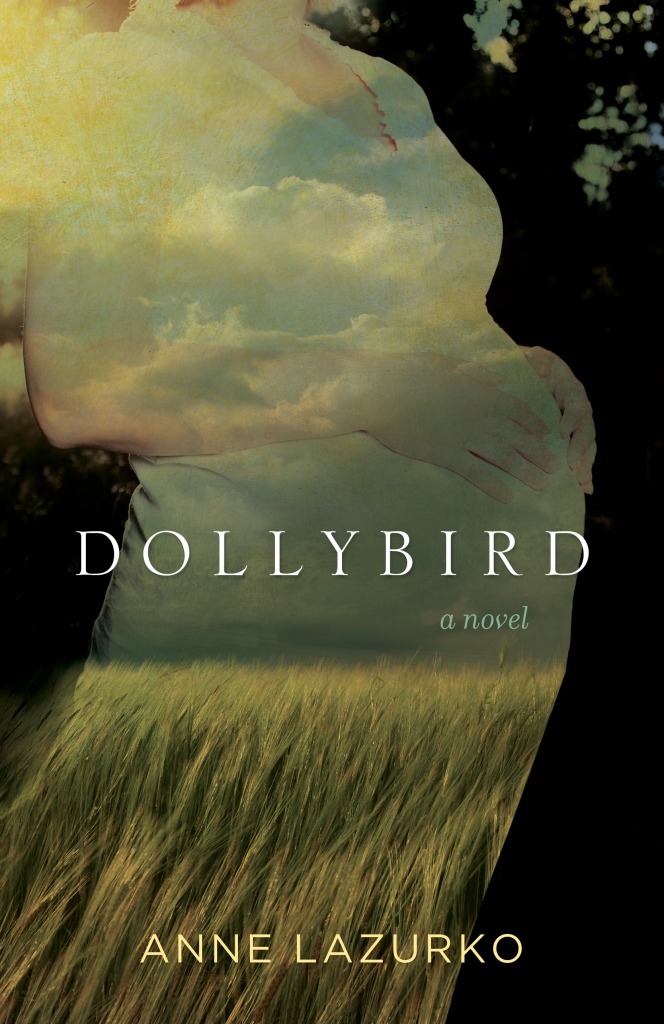
Dollybird:

Where did the idea come from for the book? 

The novel gathered itself together around two ideas I stumbled over in research related to the early days of the Missouri/Coteau region. One was the myriad ways in which women were vulnerable, and the character and courage it took for them to navigate stereotypes and expectations to live lives beyond their circumstances. For example, the term Dollybird was used in the region to refer to a single woman who acted as live-in housekeeper for a new homesteader. But was she really just a housekeeper? And how pure were his intentions?

The second was the myriad ways in which a person could die in those days. Have a look at the headstones in an old abandoned prairie graveyard. What, beyond childbirth, killed so many women, babies and young children in those days? Men too? The maladies of the time were virulent and the diseases ugly, but in some parts of the country medical practices still included blood-letting. Imagine the potential stories.

Out of these threads a cast of characters was imagined and the novel written.

What genre does your book fall under?

Historical fiction. It’s literary, character driven, and the plot is influenced by the inevitable effects of the prairie landscape.

Which actors would you choose to play your characters in a movie rendition?

Okay, I thought I’d stick with Canadian actors and as I enjoy film but don’t pay too much attention to names, I’m embarrassed to say I only know those of the bigger celebrity types. With that caveat: Ellen Page could be Moira, and I know my young adult daughters would thank me if Ryan Gosling played Dillan. I’ve always thought Paul Gross would make a good Silas (he’d be a treat for us older types).  And Meg Tilly, ala Bomb Girls, could be Mrs. Miller.

What is the one-sentence synopsis of your book?

Scattered through with birth, death, and the violent potential of both man and the elements, Dollybird excavates the small mercies that come to mean more than they should on a prairie landscape peopled with characters who struggle under a huge sky that waits, not so quietly, for them to fail.

 Will your book be self-published or represented by an agency?

Neither. It will be published by Coteau Books, an independent literary press, and is to be launched Fall 2013.

How long did it take you to write the first draft of your manuscript?

Hmmm, there were so many drafts, it’s hard to remember back to the first. I still had all four of my children at home when I was writing it, so…. I’m going to say a year and a half? But two of my children are well into their university careers now, so that tells you how long it’s been, and how many drafts have been written since that first.

Who or what inspired you to write this book?

My sisters. I have five of them, all of whom I consider renaissance women. And I think my main character, Moira Burns, an east- coast- born- aspiring- doctor- sent- west, is one of those too. Despite the horrific odds for women of the time, she becomes more than she thought herself capable of, overcomes circumstances to find joy in a way she had never previously imagined. Many of my sisters have done the same. Many women everywhere do the same. They find grace.

What other books would you compare this story to within your genre?

This is a tough one. I tried to think of recent historical fiction that examines the role and struggles of women, real women, “whose repertoire is seldom limited to a thin consumptive cough or a scream of rage”. (Love this quote from Lawrence Lipking in, Abandoned Women and Poetic Tradition”). The women in books like Marina Endicott’s, The Little Shadows, or Amy McKay’s, the Birth House go beyond such stereotypes and caricatures, as I hope my characters do.

What else about the book might pique the reader’s interest?

I think readers should know this story is told from the point of view of two very distinct characters, both coming of age far from home and in what seems a very inhospitable place. The journey of young homesteader, Dillan Flaherty, is as much influenced by Moira as hers is by him. In writing the story from their two first person points of view, I hope the reader is given a broader picture and deeper insights into each character.

Also, I recently learned that Sinclair Ross’s mother was a Dollybird of sorts. She was divorced from her husband in a time when divorce didn’t happen and found work as housekeeper, taking young Sinclair with her as she moved from farm to farm. Some say this accounts for his ‘mother’ issues and his homosexuality? Any thoughts?

Dollybird is an English term and still in use. In fact, my friend heard it used recently on Coronation Street to refer to a ‘slutty’ woman. I couldn’t be more pleased!

OKAY,

so there you have my story behind the story. Please take time to view answers from the following fantastic writers about their work and their inspiration.

Anne McDonald, author of To the Edge of the Sea at  
http://totheedgeofthesea.blogspot.ca/

Maureen Ulrich, author of the YA ‘hockey books’, Power Plays, Faceoff, and Breakaway at
http://www.maureenulrich.ca/Maureen_Ulrich/Blog/Blog.html

Catherine Egan, author of the Tian Di trilogy for young adults at,
http://www.catherineegan.com/

Shelley Banks, poetry and fiction collections at
http://shelleybanks.ca/blog/

Lisa Guenther, fiction at 
http://www.brickhorse.ca/

Fall 2013 release

And so, after some confusion on my part as a new author, I have confirmation that my novel is to be released by Coteau Books, fall 2013. I am thrilled to have Sandra Birdsell as my editor and we are going through the first round of edits. She warns me I might faint at all the scribbles on the manuscript, but I’m actually looking forward to this. I have no delusions that my story was submitted in perfect form, it was just as far as I could take it by myself, so I am happy to have someone help me make it better.

I’m getting an author photo done, tyring to come up with a draft ‘blurb’ for the inside front cover that will make potential readers leap to buy the book (!), and preparing an author bio for promotional purposes.

So many things in life are hurry up and wait. This is the other way around. I waited, and now I feel the adrenaline priming me to hurry.

As I work through the edits I hope to reveal a little about the characters and their story in this blog. A little pre-release taste of what you might find beyond the ‘blurb’!

Stay in touch.

Keep the Baby Despite the Bathwater

Seven years after I started writing Dollybird, my novel has been accepted for publication by Coteau Books. There was, on receiving the news, much dancing and laughing and crying and more dancing, by myself, in my small studio at the top of a lonely arts centre. And then again when I told my husband and family.

Some people are amazed at my perseverance. Others are slightly amused at my delusion. I think I have been both, after all, I stuck with a project for five years only to spend another two selling it; and I confess to a confidence that I probably had no reason to possess outside of wilful blindness to the statistics around book publishing. In the end it doesn’t matter why I carried on, only that I did.

Mostly I’ve worked hard and had faith. Readers were positive, rejection feedback from publishers always personal and constructive (only a writer can know what a ‘good’ rejection is, but suffice it to say I never received one of the dreaded form letters), and I maintain a sense that the core of the thing works. I still like my characters, I still think a prairie setting can be made universal by good characters, and I can still get caught up in my own plot after all this time. In other words, while I spent months revisiting and revising, I never threw the baby out with the proverbial bathwater, and for that I am now so grateful.

As soon as I have details on dates and such I will post those here. I hope to enjoy every element of the publishing process and I’ll share what I can. In the meantime the validation acts as encouragement to work harder on my second novel (see literary work above), and as proof it can happen. It really can.

On This Harvest Moon

There is something primal about harvest; it’s relevance to a farmer’s life akin to the primitive instincts to hunt and gather and save and procreate.

My husband would probably say I’m nuts.

We wouldn’t starve if the harvest didn’t happen. Our choice to buy crop insurance, to market wisely and watch our cost of production helping to ensure our immediate comforts. The act of harvesting is itself far from primitive these days, calculated as it is in horsepower and fan speeds and sieve openings and bin space and grinding truck gears (that would be me). Hardly the stuff of basic survival found in Maslow’s first level of need. Hovering somewhere near the glory of self-actualization (ha!), our society barely knows where food comes from, let alone worries about its production.

But for a farmer, harvest is primal in that it is of utmost importance. Sure we need the money to run our business. Yes we glory in high yields and good prices, and sweat the years when the reverse is true. Of course there is pride in a clean golden field of wheat or a canola swath as wide as a gravel road.

But there is something more which defines us and connects us, something innate.  It begins with the act of planting, the turning soil become a connection to land that offers itself to our use despite legal titles inscribed with our name. It threads its way through the weather; the sun and rain and wind and hail paying little attention to our pleas for more or less or just enough, rendering us insecure in our dependence. It finds its resolution in the dust and toil of harvest, the final act of faith and acceptance, because when it comes down to it we cannot change one damn thing that came before. The yields and quality, the season, will be. And we will prosper. Or not.

It is this that connects us to each other, this dependence, no less primal than the coyote’s howl as we gaze at the same harvest moon, and watch the combine eat up the swath.

Exactly So

“I look for an understanding of the human predicament, to discover or re-discover how it is with man, who he is and how it is  between him and other men. To consult the record in books both ancient and modern is to come across every vice, virtue, motive, behavior, obsession, consequence, joy, and sorrow to be met with on the roads across the frontiers of the millennia. What survives the wreck of empires and the sack of cities is the sound of a human voice confronting the fact of its own mortality.”

Lewis H. Lapham,  Ignorance of Things Past, Harpers Magazine/ May 2012

Getting it Right, or Intentionally Wrong

If history repeats itself, it’s because no one is paying attention to what really happened. Or at least that’s what some of my research into the Indonesian independence movement suggests.  Despite knowing better, in an intellectual sense, I think most of us veiw history as a kind of static thing. Events happened for various reasons, there were assorted people, institutions, and circumstances involved, this probably caused a change of some nature, and then history moved on. It’s become a cliché to say the victors write the history, but it’s largely true, and yet we are forced to assume its accuracy for lack of an alternative.

Take the case of the Dutch/Indonesian conflict. The colony won the war. The Dutch were sent home.  But not before well-intentioned young Dutch soldiers committed acts for which they were condemned internationally and at home; not before reluctant Indonesian villagers were forced, through terror and torture inflicted by fellow Indonesians, to capitulate to the demands of the independence movement.

There was confusion and terror on all sides. Yet, the victorious Indonesians do not even footnote their culpability in the history they teach to their children. Successive governments have used history as a tool for nation building, the people and events of the independence movement writ large to ensure a sustained belief in the cause, quelling discourse about the true costs.

The vanquished Dutch, on the other hand, remained virtually silent about their loss to the colony, their history equally free of reference to culpability but for reasons of public shame, not pride. Government and historians focussed instead on their renowned history of resistance to the Nazis, keeping the populace ignorant of the ‘excesses’ in the colony; history obscured for nation-building.

But what does conveniently edited history do then to the psyche of the Dutch soldier or the Indonesian peasant who was there, who witnessed and participated, who suffers the memories? Who do they become in the great puzzle of war and violence and good intentions? These are the questions I hope to explore further with the fictional characters of Wim, a dutch soldier who winds up in an Indonesian hospice, and Sari, the Indonesian nurse who cares for him, both struggling to come to terms with just such questions.

Wish me luck.

Previous Older Entries